Where to Eat in South End: A Local's Guide
South End changes block by block, but the eating holds a shape: mill-building dining rooms, brewery patios, and brunch lines that spill onto the sidewalk by 10 a.m.
The smokestack on South Boulevard still has the old mill's name painted on brick, faded but legible if you wait long enough at the light rail platform to read it. That's South End in one image: a neighborhood built on cotton spinning that now spins craft beer and glass condo towers, with brunch lines out front. If you're trying to figure out where to eat in South End, start by understanding what you're walking into, a stretch of converted mills and new construction where the kitchen behind a given door might be older than the building's fresh paint or younger than the rail line running past it.
South End doesn't have a single food identity so much as three or four running at once, stacked into old brick and new steel within a few blocks of each other. Knowing which one you're in the mood for matters more than knowing a specific address.
Where to Eat in South End Depends on the Time of Day
Morning belongs to coffee counters tucked into ground-floor retail spaces, the kind with exposed duct work and a line that reaches the door by nine on a Saturday. Midday shifts toward fast-casual counters built for the office crowd working out of the newer towers, salads and grain bowls meant to be eaten at a desk or on a bench near the tracks. Evening is when the neighborhood shows its range: brewery patios fill first, dinner reservations at the sit-down rooms start around six thirty, and by nine the sidewalks along South Boulevard are doing double duty as waiting rooms.
The rail line is the spine that organizes all of it. Stops sit close enough together that you can hop off, eat, and walk to the next platform rather than circling for parking, which matters in a neighborhood where a single block can eat fifteen minutes if you're driving during peak hours.
The Mill Buildings Set the Tone
What separates South End dining from a strip of stand-alone restaurants is the architecture underneath it. Textile mills built a century ago for spinning and weaving now hold dining rooms with the original heavy timber beams still overhead, brick walls that haven't been resurfaced, and windows sized for factory light rather than street appeal. Developers kept the bones on purpose. A restaurant inside one of these buildings tends to lean into that history rather than fight it, with menus that push Southern cooking somewhere more ambitious: pimento cheese dressed up rather than abandoned, shrimp and grits reworked with a heavier hand on technique than a diner would use.
That mill-conversion feel extends into the food halls, too, several vendors sharing one long-span industrial room instead of a single kitchen running the whole space. It's a low-commitment way to sample a handful of cuisines in one sitting, useful on a night when the group can't agree on tacos versus ramen versus wood-fired pizza.
Brewery Row Feeds You Too
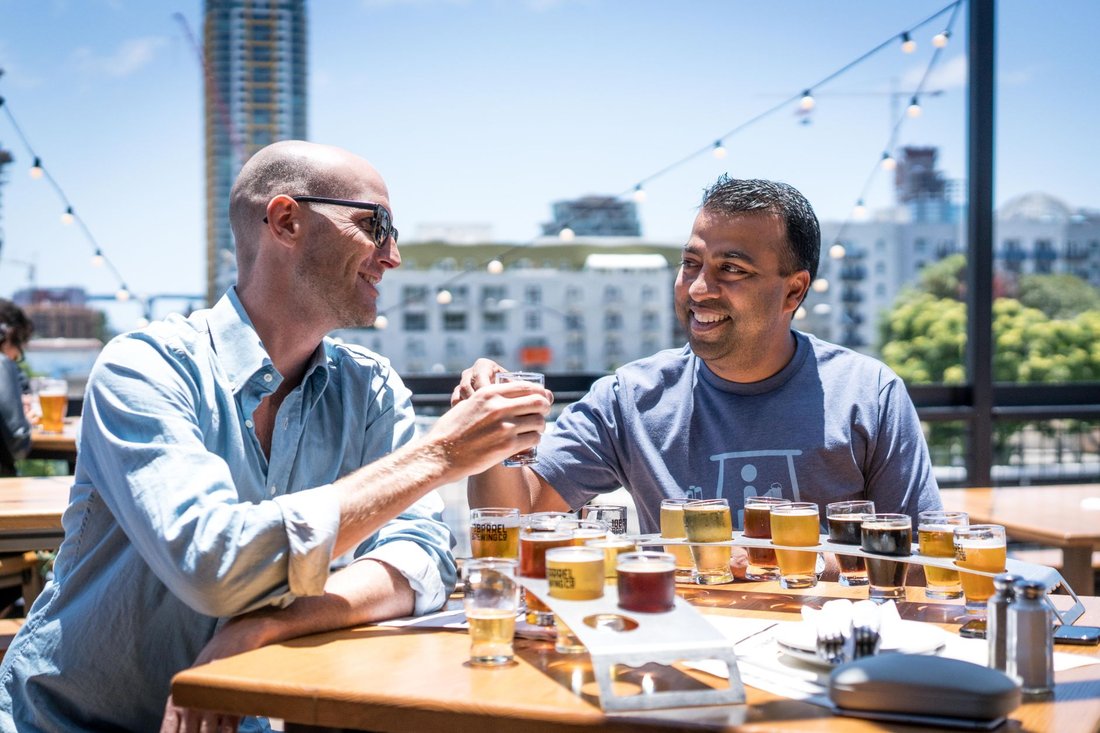
South End earned its reputation as brewery row before it earned much of a reputation for anything else, and the beer never really stood alone. Most of the taprooms along the corridor built out real kitchens once they realized people were staying for hours, not just one pint, so the food leans toward things that hold up on a communal picnic table: wood-fired flatbreads, or smoked meats with that tomato-tinged Piedmont edge, or a pretzel the size of a dinner plate. If you're already deep into the brewery crawl, you rarely need to leave the block for dinner. The patios themselves are half the draw, string lights strung between converted warehouse walls, dogs underfoot, a train rumbling past every few minutes.
Brunch Is a Neighborhood Sport
No meal defines South End the way brunch does. It's less a menu category than a weekend ritual, one that starts with a name on a waitlist app and ends ninety minutes later with a table. The format repeats across the neighborhood, the same rhythm you'll find at brunch spots across Charlotte: biscuit-forward plates, a serious bloody mary bar, a patio that fills before the dining room does. Groups plan entire Saturdays around it, brunch first, then a walk down the rail corridor to browse the shops that have filled in the ground floors of the newer buildings.
A rough guide by time of day
- Early morning: coffee counters and pastry cases near the rail stops, best on foot before the sidewalks fill in
- Midday: fast-casual counters built for the office crowd, quick enough to eat on a bench by the tracks
- Evening: mill-building dining rooms and sit-down Southern menus, best with a reservation on weekends
- Night: brewery patios and food halls, the most forgiving option for a group that can't agree on cuisine
What the Neighborhood's Growth Means for Your Plate
South End is not a finished neighborhood, and the eating scene changes almost as fast as the skyline does. The same forces putting up new apartment towers every year are also turning over ground-floor retail space quickly, so a spot that felt like a fixture two years ago might be a different concept by now. That churn cuts both ways. It means the neighborhood keeps producing new options for people who want to try something they haven't had before, but it also means asking a local before you commit a Saturday night to a place you read about a while back.
The honest advice is to treat South End less like a list of destinations and more like a corridor you work along the rail line, one stop at a time. Start with what kind of night you actually want, patio beer and flatbread, a quiet dinner in a converted mill, or a brunch line worth the wait, and let the neighborhood's density do the rest. It's compact enough that changing your mind halfway through the evening costs you a five-minute walk, not a wasted trip.